Welcome to Science is So Sexy!!


For more weekly science articles by Esmeralda,


visit www.mybugsandi.com.


See you Soon for more Sexy Science
Great value Unlimited Broadband from an award winning provider
Showing posts with label everyday products. Show all posts

Tuesday, 13 January 2015

What are superfoods?

0 Sexy People gave their opinion
My Dear Sexy Readers,

Thank you all for the amazing feedback I got from you on the different social networks about my latest article "What's a gluten-free diet?".

Right after the holiday season, we all love a good detox program to purify our body and soul from all our Christmas sins. Some of us take the plunge and go for the latest fad diet. Whereas others feel they got the whole Healthy Diet with particular attention to superfoods.

But what are those Superfoods everyone seem to talk about these days? And most importantly is there any truth, medical or theoretical evidence that these foods are Super?

What are Superfoods?

Superfoods are nutrient-rich foods that are considered to be especially beneficial for our health and well-being.
Superfood Berries

However the name 'Superfood' has been disputed by many saying that it is a non-medical term used in marketing with little scientific evidence for it. The term itself has been prohibited in the European Union since 2007 unless it is accompanied by a medical notice approved by an medically and scientifically accredited name or organisation.

What are these superfoods?

Berries, nuts and seeds in general, dark green vegetables (such as spinach, kale, collard greens, Swiss chard, Brussels sprouts, and broccoli), citrus fruits, fatty fish such as salmon, mackerel, and sardines, vegetables with bright, dark, or intense colors (such as beets and their greens, and sweet potatoes), many legumes (peanuts, lentils, beans, raw cocoa), and whole grains as a group.

You might say, 'Well, if these are good foods to begin with, foods that could be part of a healthy diet, what's wrong with naming them Superfoods?'

Tweet This - If these are good foods, part of a healthy diet, what's wrong with naming them Superfoods?

And in essence, there's nothing wrong with it if these are actually eaten as part of a healthy diet and not popped in your mouth in a pill form!!!

Green tea leaves from Chengdu
For example, green tea is well known for its superfood quality as it is a superoxidant and contains B vitamins, folate (naturally occurring folic acid), manganese, potassium, magnesium, and caffeine. Many weight loss supplements include green tea extracts but there is currently insufficient scientific evidence that consumption of green tea or its specific extract EGCG has any health benefit.  The FDA itself sent a warning letter in 2013 about false advertising and health claims concerning the effects of green tea consumption.

Why are they called Superfoods?

Many Superfoods contain natural chemicals that have been shown to have positive health effects in laboratory studies. These include antioxidants, vitamins and minerals.

It’s certainly true that a healthy diet can help to reduce the risk of cancer, cardiovascular disease, diabetes but it is unlikely that any single food will make a major difference on its own.  

Cancer Research UK note that Superfoods are often promoted as having an ability to prevent or cure diseases, including cancer; they caution, 'you shouldn’t rely on Superfoods to reduce the risk of cancer. They cannot substitute for a generally healthy and balanced diet'.

Fighting Cancer with Superfoods?

From HERE
There is some lab data that show that some of these ingredients can affect cancer cells in a laboratory setting, including killing them and stopping them from growing. But unfortunately jumping to the conclusion that eating those nutrient-rich foods can affect your cancer outcome is a biiiiiiig leap!

First of all, your body is a complex organism and the interactions between the food we eat and our bodies are much more complex than those between a purified chemical and cells in a tube.
Secondly, food is itself complex: An isolated chemical may behave very differently in a test tube than when it is eaten as part of food.
Last but not least, dose as always is of paramount importance. Even eating very large portions of a ‘superfood’ might not provide enough of a specific ingredient to a sufficient amount to have any effect on our health. For example, garlic contains a nutrient alleged to help reduce cholesterol and blood pressure. But you'd have to eat up to 28 cloves a day to match the doses used in the lab!

Is it bad though?

As part of a healthy diet, the short answer is not at all. With everything though, dosing and pacing are essential. You won't get a quick fix by gorging yourself on Superfoods, you won't cure any disease and your disease risk may not be that much reduced if you are already on a healthy diet. If anything, an exclusive diet might put you at risk of deficiency of other essential nutrients.
Some foods when eaten in large quantities can put you at risk of toxicities - think fish and mercury - for example, some seaweeds contain natural toxins which are thought by some to increase risk of cancer and liver damage.

Do you like your Superfoods? Do you include them in your diet on purpose?

See you Soon for more Sexy Science,

References and further reading
Wikipedia
Cancer Research UK - Superfoods
NHS - Superfoods

Wednesday, 7 May 2014

Are you a Calorie or a Chemical counter?

12 Sexy People gave their opinion
My Dear Sexy Readers,

I know it is not possible to argue with everything and anything scientifically inaccurate that is happening on the net and especially on Facebook, but really... It IS difficult to let it go! Now I love social media, I love blogging, I love how all international communities come together, but with the amount of information that we are absorbing everyday, I think we are all guilty of forgetting to, once in a while, stop in our tracks and wonder 'Is it really true?'. Now, this article is certainly not a post about debugging some fact or another but about using my beloved Sexy blog to do just what its primary functions are supposed to be which are to 1. rant about something and 2. share information I deem useful/interesting/Sexy for my beloved Sexy readers! And now that I've finished 1. Let's get on with 2.:

The image that sparked this ranting is this one ==>

I'm sure all of you have seen it and I know from the number of Sexy requests I get that the majority of us are concerned about chemicals, whatever anyone refers to when using this word.
Also, my Sexy followers are Sexy because they are concerned about adopting a healthy lifestyle.
And as a Sexy note, I would like to define Sexiness as the level of confidence one can exhube when feeling healthy through whatever mean one employs to reach one's desired healthy state.

As a community blogger, I would like to share with you a couple of blog articles I particularly enjoyed and found most interesting and relate to this picture:

On the subject of calories
Everyday, I receive updates from the ScienceBlog. It's a very interesting and efficient way to keep up to date with the latest news on diverse subjects and be sure these are scientifically treated and accurately reported. A few months ago, I came across a particularly intriguing post on the confusing science behind weight loss. The concepts explained challenge what we know or think about weight loss-inducing diet as well as the relation between exercise and weight loss. If we are all interested in improving our health by adopting a healthy lifestyle, we are not so very good at implementing common sense in our quest. This article is certainly food for thought But beware it is not for extreme senseless decision making such as 'no point exercising then'.
As always, all in good measure!!

On the subject of chemicals
I wrote many articles on chemicals, notably a mini-series on chemicals in our make up as well as a mini-series on chemicals in shampoos with a special focus on Parabens and SLS.
Time and time again, we are getting confused by the scary nature of the word itself 'Chemicals', but do we really need to make a hotch potch of it all? That is precisely what I'm worried about when I read all these articles and see these pictures on FB/Pinterest.
To make sense of it all, I call upon a fellow #scienceblogger but also a #nailblogger well recognized on the blogosphere who is Michelle aka Lab Muffin.
She wrote a well explained article on the very nature of the word 'Chemical' that should highlight a few concepts that unfortunately get lost among the vast information pool that is Internet.

Let me know your thoughts on all these pseudo Scientific facts that you can encounter and how do you do to make sense of it all? And of course, are you a calorie or a chemical counter?

See you Soon for more Sexy Science,


More Reading
The Confusing Science Behind Weight Loss
Chemicals vs Natural

Monday, 24 March 2014

6 Facts about Cosmetics Regulation

10 Sexy People gave their opinion
My Dear Sexy Readers,

I know a lot of you are very worried about beauty products and in particular the controls behind them. We want them to be safe to make sure that any allergic reaction or sensitization effect can be identified.
So here are a  few facts on cosmetics regulations:
"Responsible manufacturers invest their reputation in their brands, building trust with loyal customers and relying on customer satisfaction for their success. Such companies are not going to jeopardise that by selling unsafe or unsatisfactory products."  Excerpt from HERE

1. In the US, Cosmetics regulation is ruled by the FDA (Food and Drug administration) agency part of the US department of Health and Human Services and has been established to protect and promote consumer's health. They also regulate other things such as food, drugs, vaccines, etc...! They are not in charge of the testing but its authority includes the banning or restriction of ingredients for safety reasons (see below for a list). 
In Europe, regulation is implemented by a committee from the European commission. The latest document was applied in July last year 2013 and refers to the '1223/2009' amendment of the last 2008 regulations. The UK also complies to it and is reviewed by the "Cosmetic Products Regulation". The full document can be viewed HERE.


2. In the US, The Cosmetic Ingredient Review (CIR), an independent, scientific review board, critically evaluates chemical ingredients used in cosmetics and publishes the results of its findings in the peer-reviewed literature. 
Note for Skeptics: " Health-related allegations about cosmetic ingredients are generally based on the results of high-dose laboratory testing in animals and have little relevance for humans. As true now as when Paracelsus said it in the 16th century, “It is the dose that makes the poison.” . Animal and human physiology differ in crucial ways, further invalidating simplistic attempts to extrapolate rodent testing to human health risks. The cosmetic industry should be encouraged to publish more of its toxicity studies and safety evaluations, which would aid in dispelling the uncertainty that some consumers have about cosmetic safety. " Excerpt from HERE

3.  In the US, FDA has consistently advised manufacturers to use whatever testing is necessary to ensure the safety of their products and ingredients, which do not need FDA premarket approval, with the exception of color additives. Under the law, manufacturers are not required to register their cosmetic establishments or file their product formulations with FDA, they are encouraged to participate in FDA's Voluntary Cosmetic Registration Program (VCRP) using an online registration system.
In Europe, The document (EC) 1223/2009 clarifies the role of a ‘responsible person’ and a distributor in ensuring compliance with the relevant obligations, it requires all cosmetic products to be notified to the European Commission rather than to national authorities and more clearly describes the product information file. It also introduces a concept of Serious Undesirable Effects, which have to be reported, and defines nanomaterials, which also have to be reported. 


4. In general, except for colour additives and those ingredients that are prohibited or restricted by regulation, a manufacturer may use any ingredient in the formulation of a cosmetic, provided that:
  • the ingredient and the finished cosmetic are safe under labeled or customary conditions of use,
  • the product is properly labeled, and
  • the use of the ingredient does not otherwise cause the cosmetic to be adulterated or misbranded under the laws that FDA enforces.
Colour additives FDA
Colour additives

5. In the US, the FDA regulations prohibit or restrict the use of several ingredients in cosmetic products and require warning statements on the labels of certain types of cosmetics.
In Europe, The Regulation (EC) 1223/2009 document also lists restricted and banned substances, and provides positive lists of preservatives, colorants and UV filters (LIST OF SUBSTANCES WHICH MUST NOT FORM PART OF THE COMPOSITION OF COSMETIC PRODUCTS (UNLESS OTHERWISE SPECIFIED)

6. In the US, as well as in Europe/UK, regulatory action can be taken if reliable information indicating that a cosmetic is adulterated or misbranded is gathered; an action can be pursued through its respective Department of Justice to remove this cosmetic from the market. Cosmetics that are not in compliance with the law may be subject to seizure which means that the government takes possession of property from someone who has violated the law, or is suspected of doing so. FDA also may initiate criminal action against a person violating the law.

Additional Notes: FDA can and does inspect cosmetic manufacturing facilities to assure cosmetic product safety and determine whether cosmetics are adulterated or misbranded under the FD&C Act or FPLA. Also, the FDA collect samples for examination and analysis as part of cosmetic facility inspections, import inspections, and follow-up to complaints of adverse events associated with their use. FDA may also conduct research on cosmetic products and ingredients to address safety concerns. FDA does not function as a private testing laboratory, and in order to avoid even the perception of conflict of interest, they do not recommend private laboratories to consumers or manufacturers for sample analysis.


Are you worried about cosmetics safety? Is there something I haven't covered, let me know in the comments, I'll try to dig up some more info for you. In writing this post, I stumbled upon this amazing website that is all about regulations, scare stories, chemicals in cosmetics etc.. I think if you are worried, do check it out. I hope that, like me, you feel reassured that our cosmetics are checked out by the proper authorities.

In the meantime, if you are interested to know more about chemicals in make up or shampoos, do check out SSS previous posts.

See you Soon for more Sexy Science,


All references have been inserted as links, please hover your pointer to the relevant sections and click on them to be redirected to the websites.

Monday, 17 March 2014

Did you Know? How does the Antibiotic Amoxicillin work?

6 Sexy People gave their opinion
My Dear Sexy Readers,

I bet if you have lived in the UK for most of your life, you have only known a few antibiotics in your life (hopefully), and most notably Amoxicillin. Why is it always that one that GP prescribe? How does it work?

How does Amoxicillin work?
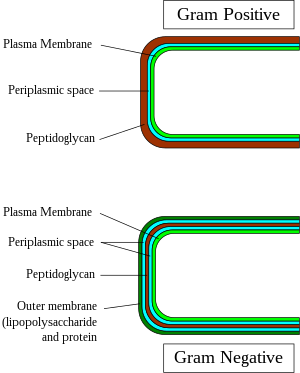
Amoxicillin is what we call a β-Lactam antibiotic (fig.1). Most β-lactam antibiotics work bystopping the production of the "peptidoglycan" layer of bacterial cell walls (See figures 2 and 3 here below). This cell wall layer is important for structural integrity (fig3), especially in "Gram-positive" bacteria (fig.2), because it is the outermost and primary component of the wall. The last step in this "peptidoglycan" chain production is supervised by an Enzyme abbreviated PBP. A β-Lactam antibiotic is similar in structure to the last building block of the cell wall, taking its place in the structure. Because the PBP enzyme recognises it as if it was a proper brick, the Antibiotic inhibits the completion of the cell wall construction, therefore making the bacteria unviable and starting a process of auto-destruction. Some bacteria have changed themselves to  make themselves resistant, either by attacking the β-Lactam ring of the antibiotic (fig.1) which is essential for the recognition with the PBP enzyme, or by modifying PBP so it's less sensitive to the antibiotics (like MRSA has).
Figure 1: The Beta-Lactam antibiotic with its Beta-Lactam ring (the square!)

Figure 2: The difference between Gram + and Gram - bacteria. Look out for the Peptidoglycan layer.
Figure 3: How the Peptidoglycan wall builds up
If you are interested in more fast read sexy facts, check out SSS Did you Know series for previous posts.

See you Soon for more Sexy Science,


Tuesday, 4 March 2014

Did you Know? About Omega-9?

4 Sexy People gave their opinion
My Dear Sexy Readers,

We are resuming our Did you Know? Series today with an extra bit of information on Omegas!!! We already talked about them in our post about Olive Oil, better than Butter? And of course in our latest post on What are Omega-3 and -6?
We already addressed Omega-7 in the latest fast-read Sexy fact of our Did You Know? Series. This time, we are going to number 9!!! If you have a Pinterest board, you might wanna check out this article through its pin.

What is Omega-9?
Omega−9 fatty acids are common components of animal fats and vegetable oils. Two important omega−9 fatty acids in industry are Oleic acid (main component of olive oil, sunflower, macadamia oil and other monounsaturated fat) and Erucic acid (rapeseed, wallflower seed, and mustard seed). Like Omega-7, but unlike -3 and -6, Omega-9 is a non Essential Fatty Acid meaning that our body can produce it. Research has shown that Omega-9 MonoUnsaturated fatty acids can help reduce the risk of cardiovascular disease and stroke by increasing HDL (“good”) cholesterol and decreasing LDL (“bad”) cholesterol.

For more information on SSS Did you Know Series, check out our growing list of amazing fast-read facts.

See you Soon for more Sexy Science,
 
Oh OK, I'm too happy about my first Pinterest infographic so here it is:

Wednesday, 19 February 2014

What are Omega-3 and -6?

4 Sexy People gave their opinion
My Dear Sexy Readers,

This is something I have been on the lookout for quite a while now and certainly since I wrote the SSS article on Olive Oil - Better than Butter? I came across a few scientific papers with various claims on Omega-3 and/or -6 and their positive and/or negative effect on our health!
But the benefits or deleterious effects on our health are as contradictory as their varied nomenclature is confusing.
So here is my understanding - so far!

What are Omega-3 and -6?

Omega-3 and -6 are called essential fatty acids - Essentials because our body is not capable of making them even though they are necessary to the good development of our organs, notably our brain (hence the claim that eating Omega-3 rich food is important for school pupils - More on this here below).
For example, DHA (a type of Omega-3) is a major component of our brain and eye tissue and is vital during pregnancy and early infancy. It’s recognised by health authorities, professionals and nutritionists as a vital nutrient for promoting cardiovascular, brain, joint, nerve, vision, skin and immune health. 

Omega-3
Omega-3 can be found written as n-3 PUFA, ALA, EPA, DHA, ω-3. So what's the difference between all these?
PUFA is a general term and stands for PolyUnsaturated Fatty Acid - more on this HERE
ALA stands for Alpha Linolenic Acid - more on this HERE - and can be converted into EPA and DHA. It is not found in fish but in nuts and notable in flaxseed which is the richest source of ALA.
EPA (Eicosapentaenoic acid) and DHA (Docosahexaenoic acid) are found almost exclusively in fish and seafood, although these forms of Omega-3 are formed by their diet of single-celled marine organisms.  The oilier the fish, the more EPA and DHA are present. Exemples include salmon, mackerel and tuna.
Adult humans can convert ALA to DHA but only in small amounts, this is because it’s mainly used for energy whereas EPA and DHA aren’t.   

Omega-6
Omega-6 can be written n-6 PUFA, ω-6. It mostly comes as Linolenic acid LA from plant oils such as corn oil, soybean oil, and sunflower oil, as well as from chicken, eggs, avocado, nuts and seeds. As you can imagine, we are consuming vast amount of Omega-6 daily. It can be converted into Arachidonic Acid AA. Another Omega-6 is Gamma-Linolenic acid GLA which was first isolated from the seed oil of evening primrose, but can be also found in safflower, blackcurrant, borage and hemp seed oils.

What happens to them once we have eaten them
If we look at the conversion mechanisms:
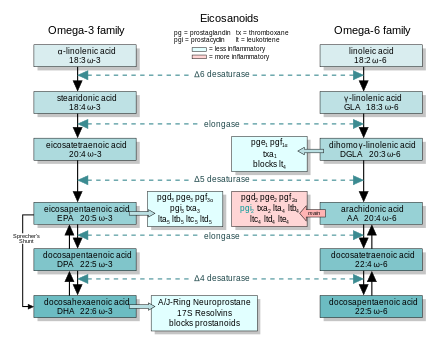
From HERE

Linoleic acid (LA) and alpha-linolenic acid (ALA) have 18 carbons. LA has 2 double bonds and the first one is at carbon 6, therefore it is a member of Omega-6 (C18:2n-6). ALA's first double bond out of the 3 is at carbon 3 so is part of the Omega-3 family (C18:3n-3). Both of these fatty acids (LA and ALA) are converted in the body to have more double bonds and increased number of carbons. LA is converted to arachidonic acid (AA) with 20 carbons and 4 double bonds (20:4) and ALA is converted to eicosapentaenoic acid (EPA) which has 20 carbons and 5 double bonds (20:5). EPA can be further converted to docosahexaenoic acid (DHA) consisting of 22 carbons and 6 double bonds (22:6).

Why are they important?
Those converted products are precursors of Eicosanoids which are signaling molecules. For example, EPA is a precursor for prostaglandins-3 (inhibits platelet aggregation), thromboxane-3 and leukotrienes-5 group which are messengers involved in our immunity and inflammation response.
Both Omega-3 and -6 have pro-inflammatory effects, although Omega-3 less so than -6 or null depending on the tissue involved, which led to the popular understanding that -3 was anti-inflammatory is -6 was pro-inflammatory.
From HERE
Both Omega-3 and Omega-6 compete for the same enzymes (Desaturase and Elongase represented here above in the middle) that will lead to these pro-inflammatory Eicosanoids. 
Wikipedia tells us that the amounts and balance of these fats in a person's diet will affect the body's eicosanoid-controlled functions, with effects on cardiovascular disease, triglycerides, blood pressure, and arthritis.
(NOTE: Anti-inflammatory drugs such as aspirin and ibuprofen, to name but a couple, act by downregulating eicosanoid synthesis.)
This competition for the enzymes sparked the wide belief that a balanced diet of Omega-3 and -6 was therefore essential for our body. Indeed, since our Westernized diet at an Omega-3 and -6 ratio of 1:20, due to the extensive use of Omega-6-rich vegetable oils, is far from the ideal 1:1 or the more realistic 1:4, it has been 'web-widely' speculated that it is the reason of our suffering from many diseases such as Cardiovascular disease, type 2 diabetes, obesity, metabolic syndrome, IBS & inflammatory bowel disease, macular degeneration, rheumatoid arthritis, asthma, cancer, psychiatric disorders.

Do I need to take supplements?
As for anything, the choice is yours!
Following the belief that taking Omega-3 supplements was boosting pupils brain's functions, a couple of studies have tested groups of pupils either by giving them supplements or a placebo, or by measuring their DHA levels vs diet vs their school results. Needless to say, none of these studies have shown unequivocally that taking supplements was the cause for an increase in cognitive behaviour. Indeed, even the pupils taking the placebos, for the simple fact that they were watched over, were improving. Regarding the lab analysis of their DHA levels, let's remember that association is not causation!
After a quick search, I found another trial, but this time, properly managed with controls and all. The results show no improvement!
But unfortunately it's not only on pupils brain's activities that Omega-3 have shown to have no effect, but also on adults's cardiovascular function and accident's incidence!
A large, randomized, controlled trial failed to demonstrate a benefit to n-3 fatty acid supplementation in patients with cardiovascular risk factors. Admittedly, one weakness of the study was that it failed to account for variability in patients' diets. However, in 1999, the GISSI Prevention Trial found that n-3 fatty acids significantly reduced cardiac deaths in people who had already experienced myocardial infarction. And in 2008, the GISSI-HF trial found significantly reduced mortality and hospital admissions in heart failure patients given fish oil capsules in conjunction with standard therapy.
Personally, I think that cardiovascular incidents is a big umbrella underwhich many varied diseases are assembled. The little differences between each could bring out those differences in Omega-3 supplementation effects. It is my understanding that, in 2014, we still don't know for sure! 
But, I didn't see anywhere that it was bad for your health! So... The choice is yours.
(However if you do suffer from cardiovascular disease, do not take my word for it, I'm not a GP Dr. It's best to listen to your GP or specialist!)

But, Omega-3 or -6 are bad for our health?
Although studies suggest that intake of ALA supplements may moderately decrease the incidence of cardiovascular incidents, the results are either slightly statistically significant or just confusing.
There are also a number of studies suggesting that high levels of ALA in the blood and fat cells may correlate with an higher risk of prostate cancer. Although a dietary supplement of 2g did increase a blood biomarker for Prostate cancer, the results were not significant. Why mention it then?
Other studies dispute the relevance of stating such an effect when observational studies show no concrete difference. On the other hand, some studies show a protective effect or a genetic predisposition to prostate cancer enhanced by ALA. Again, these data are all very confusing and have to be taken extremely lightly.
These 2 nice articles on debugging the "fake" 'link' between Omega-3 supplements and Prostate cancer along with the comments will give you some nice insight into how to interpret results:
The Huffington post
Dr Geo's post

What's SSS take-home message?
Eat Fish!
As for Omega-3 pills, look out for DHA and EPA levels. I came across this website, and I think if you'd like a supplement, this one looks the best thought of.
I'm tempted to say, stay away from Omega-6 supplements. That is for that reason that I stopped giving my baby SMA toddler's milk that contain Omega-3 and Omega-6 supplements!

See you Soon for more Sexy Science,


References
http://www.ncbi.nlm.nih.gov/pmc/articles/PMC3865857/
http://www.ncbi.nlm.nih.gov/pubmed/19921446
http://www.ncbi.nlm.nih.gov/pubmed/12442909
http://www.medpagetoday.com/Cardiology/Prevention/38969
http://www.badscience.net/2010/06/the-return-of-a-2bn-fishy-friend/#more-1675
http://www.plosone.org/article/info%3Adoi%2F10.1371%2Fjournal.pone.0066697
http://paleozonenutrition.com/2011/05/10/omega-6-and-3-in-nuts-oils-meat-and-fish-tools-to-get-it-right/
http://www.barebiology.com/pages/what-is-omega3
http://www.webmd.com/diet/healthy-kitchen-11/omega-fatty-acids
http://www.ncbi.nlm.nih.gov/pmc/articles/PMC3859488/
http://ajcn.nutrition.org/content/96/6/1262.long
http://www.ncbi.nlm.nih.gov/pubmed/15051847
http://www.ncbi.nlm.nih.gov/pubmed/18951003

Tuesday, 31 December 2013

Happy New Year 2014!!!!

0 Sexy People gave their opinion
My Dear Sexy Readers,

I wish you all a Sexy
I hope you had a fantastic Christmas, hopefully surrounded by your family. 
NOW is time for fun with friends!!!
If you are out and about tonight, you will be in full preparation mode about right now, so if you are wondering what are the "chemicals" you put on your face, check out SSS mini series on Chemicals in your Make up.
Later on, you might be tempted by a late night snack such as a little omelet? Maybe you will be wondering if your eggs are still fresh, although this might not be your biggest worry. Anyhow, here is how to know!
Or maybe you'd like a nice piece of toast with some Nutella on it?
To make sure that you are not too hungovered, you might be tempted to finish your night with a cuppa. Find out here what are the effects of caffeine in your body.
Tomorrow morning, you will probably wake up wondering why you feel the way you feel!?! It might be about anything but this article is about 'feeling rough' after a big one!!!
And then will start the usual guilty feelings about not respecting your body, so you will be tempted to start a January Detox programme. Come over here for some tips and how to avoid spending too much money on so called miracle cures!

See you Soon for More Sexy Science,


Tuesday, 24 December 2013

Merry Christmas

0 Sexy People gave their opinion
My Dear Sexy Readers,

I wish you a
I hope you have enjoyed this year's So Sexy articles.
And if you are in full Xmas preps and baking your way into your family's get together dinner, you might find the article about the difference between yeast and baking powder interesting or useful or need to know how to make a gorgeous home made mayonnaise.
Also, little tricks here or there about why you cry when you are chopping your onions, but fear not, they are good for your health, check it out over here.
When you'll be all finished in the kitchen and will be preparing yourself, you might wonder if wearing make up is really healthy, this mini-series on Chemicals in your make up will help you make up your mind on the subject. As well as being informative and an excellent conversation topic, check out this mini-series on What's in your Shampoo? with a focus on the infamous SLS and Parabens.

See you Soon for more Sexy Science,


Wednesday, 21 August 2013

Youtube Geek Week

0 Sexy People gave their opinion
My dear Sexy Readers,

Special week on youtube where you can let your geek out and check out some cool and nerdy videos! WHY NOT???
I selected this one out for you, 10 cool experiments to do at home:


See you soon for more Sexy Science,

Sunday, 21 July 2013

To drink or not to drink caffeine...

0 Sexy People gave their opinion
Dear Sexy Readers,

Lift your finger who starts his/her day with a cup of coffee or tea?
Lift your finger who has eaten chocolate - at least once?
Lift your finger who drinks/has drunk a cola/energy drink - at least once?

I think everyone has - even babies through breast milk - consumed some caffeine at some point in their life!! And we all agree that it has an effect on our body and on our brain!! Personally, I know it well enough as I am OVER sensitive to caffeine:
Apart from chocolate (I'm Belgian after all!!), I had to strip any caffeine-containing product from my diet, or else I would suffer from different side effects ranging from heart stomping, breathlessness to complete choking, fainting and crazy restlessness!
But whyyyyyyyy? I used to looooove Tiramisu! Can you imagine going to an Italian restaurant and all your friends raging about their tiramisu and you not being able to have even a little bit??? Such is my life!! (Until a friend of mine recently made me a special milk chocolate Tiramisu!! miam miam)
On the other hand, one of my friends, was telling me about how she was trying to cut down on her coffee intake to try to reduce some of the side effects she was experiencing such as hyperventilation and of course addiction to the substance!!
She asked me if I could have a look at how it works on our brain and why, if such bad effects happen to almost everyone of us, isn't caffeine banned from our diets already. I told her that the population would probably go crazy if the government was to ban coffee. After all no cancer/diseases are publicly known to be related to high caffeine intake. Or is there? Let's have a look:

Caffeine

Structure
Caffeine is a natural stimulant, chemically called a xanthine alkaloid. Other xanthine alkaloids include theobromine found in cacao and theophylline contained in tea leaves. Some fruits/leaves contain more than one type of xanthines such as the yerba mate leaves a.k.a loose tea.

Sources
Caffeine can be found in coffee plant, tea bushes, yerba maté, guarana berries, guayusa and yhe yaupon holly, and products derived from kola nut.
 
How does it work on our body?
Caffeine acts on our brain by inhibiting the action of a molecule called Adenosine. This adenosine naturally circulates in our body, especially in our brain, and its role is to suppress activity making us feel drowsy.
Simply put, Caffeine stimulates brain activity by stopping Adenosine from suppressing it! It can do so because their structures are similar. Caffeine can therefore "pretend" to be Adenosine and binds to its receptor.

How much?
As for everything, dosage is crucial! Personally, 0mg of caffeine is my maximum, some people it's 200mg. How come? Well, because caffeine is a natural stimulant and its effects depend on body size and our degree of tolerance, which increases as consumption increases making caffeine a legal and unregulated addictive psychoactive substance!

Its effects
It reduces drowsiness and increases alertness. But it also helps the body use less sugar and more fats, something that is used in caffeine pill for athletes or people on diet (Beware that abuse of these pills - and "high"dose depends on your body metabolism - have resulted in death)!

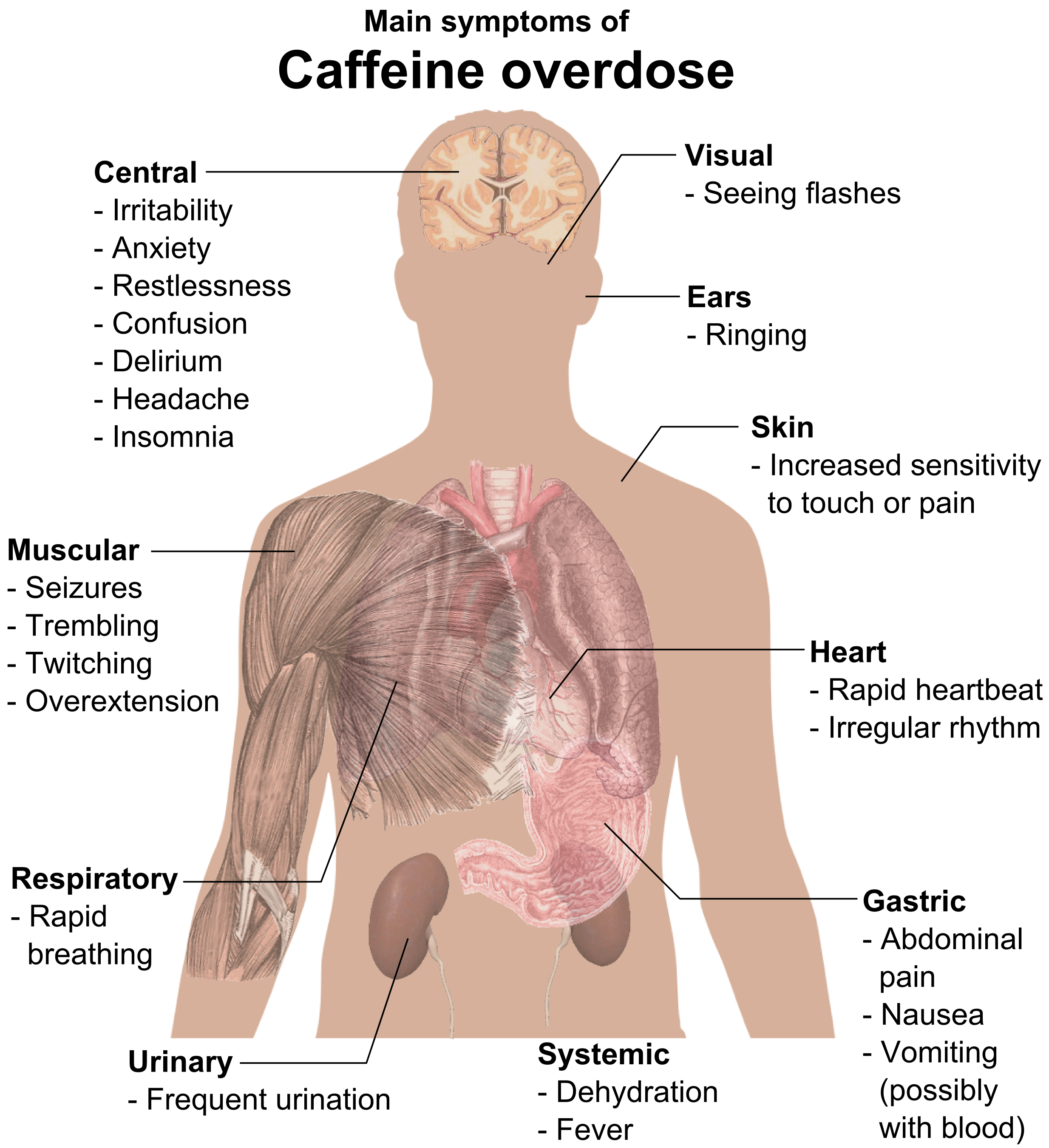
Side or overdose effects
Nausea, anxiety, vomiting, heart palpitations, restlessness, fidgeting, excitement, insomnia, face flushing, diuretic effect, muscle twitching, rambling of though and speech, irritability,...


Withdrawal effects
Include headache, irritability, inability to concentrate, drowsiness, insomnia and pain - can last up to 10 days.

Regarding diseases: Caffeine - friend or foe ?
I think this guys made a really good video on it summarising pretty well all the research I read about. Enjoy - and as everything Doses Matter!! (I'm not sponsored by that guy so if you click to check out his website, that's your whole responsability ;))


So, are you addicted? What does caffeine do to you?

See you soon for more Sexy Science,


Thursday, 2 May 2013

A boy and his Atom - the smallet movie...

0 Sexy People gave their opinion
Far from advertising IBM, this mini-movie had to find its place on SSS!!! Have a look


See you soon for more SSS,

Wednesday, 13 March 2013

So Sexy Sciencey Things on Pinterest #7

0 Sexy People gave their opinion
My Dear Sexy Readers,

Here is a snapshot of Pinterest SSS board with a focus on chocolate. Don't forget to have a read on SSS previous post on "Chocolate Spread Recipe for Disaster?".
Pinterest SSS #8
You can also check out SSS Pinterest Collection and follow the SSS board if you too are on Pinterest ;)

See you Soon for more SSS,

Friday, 22 February 2013

What's in Nutella?

6 Sexy People gave their opinion
My Dear Sexy Readers,

I was at a pastry shop with some friends from my native Belgium and we somehow got to talk about Hazelnut chocolatey spreads. My friend explained to me that there was a massive boycott against a famous "chocolate spread" (my faaaaaaavourite miam miam!!) because it contains palm oil which causes cancer! :/
Of course, this is again one of those affirmations that really needs to be clarified because I haven't heard of any studies showing this! So I told her I would look into it...

Hazelnut/Chocolate spread ingredients

Mine (because yes, I do ALWAYS have one jar on the go!) says it contains:

Sugar, Vegetable oil, Hazelnuts (13%), Fat-reduced cocoa (7.4%), Skimmed milk powder (6.6%), Whey powder, emulsifier (Lecithin of soya), Vanillin.

Note: If you're wondering what an emulsifier is, I'm writing "Did you Know #3" post about this, There's already a little bit of info here: Did you Know #2

So, we all know what skimmed milk powder, cocoa, hazelnut, sugar and vanillin (component of vanilla extract) are.
Whey Powder is a left over product from the production of cheese from cow's milk. It is used as a nutritional supplement. It is the liquid remaining after the milk has curdled. Research shows that whey proteins are highly beneficial for your health, immunity, cancer, infection, learning and aging to name but a few (Krissansen, 2007).
We are left with the dubious name Vegetable oil which could be anything from olive oil to grapeseed oil. The problem that people have here is that sometimes it stands for palm oil and manufacturers deliberately hide the palm oil name under vegetable oil (see below).

Palm oil
From HERE
Extracted from the red pulp of the palm tree fruit, it makes a reddish oil that is rich in saturated fats.

The difference between monounsaturated fats, polyunsaturated fats and saturated fats has been covered in a previous post entitled "Olive oil, better than butter?". (If you are interested in different oils and Omega-3, -6, please check out SSS series on Omegas)

In brief, the type of fats that you ingest will influence the metabolism of cholesterol in your body such that ingesting:

Saturated fats increase LDL and HDL synthesis
MonoUnsaturated fats decrease LDL and maintain HDL synthesis
PolyUnsaturated fats decrease LDL but in too much quantity can decrease HDL synthesis
TransFat increase LDL and decrease HDL synthesis

The choice between LDL and HDL synthesis is crucial for your health as only HDL transport the cholesterol to its final destination, such as the liver. The LDL, when in too many numbers cannot be taken up by the cells and are eaten by macrophages. Those macrophages form plaques that are trapped in the blood walls and cause all the undesired effects that we know such as heart attacks and strokes.
=> Hence, the vulgarized translation HDL=Good cholesterol and LDL=Bad cholesterol.

Usually oils are rich in mono- and poly-unsaturated fats which make them better for your health than say butter. Here, Palm oil is rich in saturated fats and is definitely not as good!

As in everything (except smoking which is bad even in small doses), doses matter. Don't go on binge eating butter, chocolate spread nor olive oil, it cannot be good!!!

Carcinogen?
But can it cause cancer, like my friend was saying she heard?
To this day, there is no scientific studies showing adverse effects of palm oil and palmitic acid
(Fattore and Fanelli, 2013). Quite the contrary according to many studies as palm oil could have anti-proliferative effects against melanoma or other types of tumours (Komarasamy and Sekaran, 2012), be natural anti-inflammatory drugs due to their high content in tocotrienol (Nesaretnam and Meganathan, 2011), etc etc... The scientific litterature is Rich with studies showing the many health benefits of components of palm oil.

Why the fuss then?
The problem here is not a scientific one but an ethical one. 
But we are so afraid of the word cancer, whatever is said to cause cancer, we try to stay away from it - unless it is alcohol or cigarettes it seems.... So it's easier to spread a rumour that this chocolate spread is bad because it contains carcinogenic palm oil than explaining the truth.
The truth is that palm oil business is MASSIVE and to make space to all these palm trees from which the oil will be extracted and purified, a LOT of rainforests have been destroyed in Indonesia and Malaysia to name but a few countries and this of course has had a big incidence on the living conditions of some animal species. As a result, orangutans are on the verge of extinction!
Now because this is not a scientific matter, I'd prefer staying clear of this ethical question and refer those of you who are interested in this to this website which explains a little bit more about it.
Palm oil is in a LOT of products, you can find a list of which on this website.
 
See you soon for more SSS,


References
Krissansen, J Am Coll Nutr. (2007) 26(6): 7135-7235. Emerging Health properties of Whey proteins and their clinical implications.
Fattore and Fanelli,Int. J. Food Sci Nutr. (2013). Palm oil and palmitic acid: A review on cardiovascular effects and carcinogenicity.
Nesaretnam and Meganathan, Ann N Y acad Sci (2011) 1229:18-22. Tocotrienol: Inflammation and cancer.
Komarasamy and Sekaran, J. Oleo Sci.(2012) 61(4):227-39. The anti-prolitive effects of palm oil-derived products and its mode of actions in human malignantmelanoma MeWo cells.

Monday, 21 January 2013

Eating healthy to be healthy never rang so true - An onion story

0 Sexy People gave their opinion
Dear Sexy Readers,

Out with friends and talking about the fact that we are all coming down with a cold or other illness at the moment, my friend M. then replied that he hasn't fallen ill in 3 years because he has been regularly eating rings of raw onions! I just looked at him and said "What the Hell are you talking about? Dude, that's probably a myth" and thought to myself "Jeez, I need to check that out for my SSS peeps"...
BTW, Onions have previously made the SSS team when we looked at why we cry when we chop them, check it out  ;)


Onions, your winter best friend?
Why, first I googled it and what did I find? An amazing old wive's tale whereby cut onions left in rooms would protect inhabitants from illnesses. While you can read accounts of people of how they recovered from pneumonia after leaving half an onion pierced with a fork in a glass on their bedside table, there is no scientific proof to show that onions can actually absorb bacteria and viruses and free your room of these (after all) non-airborne germs!!
What you can find however regarding the consumption of onions is  a division in "beliefs" with one party (non-scientific one) that claims that eating onions - that have absorbed germs - is bad for your health and will transfer the germs to your body and the other party (scientific one) that doesn't refute the potential boost onions can give to your immunity in the fight against germs.

Onions - anti-oxidant and anti-inflammatory wonders
Turned out that many ingredients in your kitchen have health benefits such as garlic and turmeric to name but a few!
But I think first we need to look at what is an anti-oxidant and what the fuss is all about:

Antioxidant
An antioxidant by definition prevents oxidation. Oxidation reactions in our body are essential but some of them produce free radicals. Those free radicals can cause serious damage by messing with the structure of big molecules that are necessary for the fitness of your system. That is why it is important to get rid of them, but an imbalance between those free radicals and your antioxidants can lead to the development of diseases.
From HERE

Anti-inflammatory
As its name says, it reduces inflammation. Inflammation is the response of our body to infection/injury. In the case of an injury or an external inflammation such as acne and dermatitis, the 4 typical signs of inflammation at a site are being red, hot, painful and swollen. But  inflammatory diseases also include allergies, cancer, atherosclerosis, appendicitis etc...
From HERE

My onions
So what is it exactly that is so good for you! Well in fact in onions there are 3 goodnesses called Quercetin, Kaempferol and Myricetin. These are what scientists call Flavonols.
FYI: Flavonol are part of a big family, the Flavonoids, and its sister Flavanal is found in dark chocolate (and gives its bitterness).
You can find Flavonols in fruits, vegetables, leaves and grains but they are present at their highest concentrations in onions, tea, apples, berries, kale and broccoli. You can also find them as supplemented ingredients in food, mostly as preservatives.
Quercetin is most abundant in onions and apples.
In terms of magic wonders, Kaempferol has been shown to reduce the risk of developing disorders such as cancer and cardiovascular diseases for their properties as antioxidant, anti-inflammatory, antimicrobial, anticancer, cardioprotective, neuroprotective, antidiabetic, antiosteoporotic, anxiolytic, analgesic and antiallergic.
Myricetin, also present in red wine, has antioxidant properties and some research suggests that it could help keep your cholesterol low.
Also a big study on people diet habits has shown that smokers had a lower risk of developing pancreatic cancer (both are linked) if they were including flavonol rich foods such as onions (and therefore a combination of these 3 flavonols) and apples (Nöthlings et al, 2007).

Raw or cooked?
As far as the studies go, there was no distinction between the two so I can only assume that it doesn't matter. In fact, in this paper, patients had to fill a form that listed several foods, including apple (ie.uncooked) and onions as such or as part of a mixed cooked dishes (Nöthlings et al, 2007).

Onion soup recipe
Waiting to hear from fellow bloggers for theirs, here is one out of the bbc good food website!

Here you go my dear sexy readers, Come back soon for some more SSS,


References
Wikipedia
Nöthlings et al, Am J Epidemiol 2007; 166: 924-931
Diplock et al., Br J Nutr 1998; 80 Supp1: S77-112
Tapsell et al., Med J Aust 2006; 185 Supp4: S4-24

Tuesday, 1 January 2013

Feeling rough and dehydrated? Oh why?

1 Sexy People gave their opinion
Dear Sexy Readers,
(... Although I guess right now you don't feel very sexy... Did you overdo it?)

First and foremost:


I hope you all had a wonderful Xmas and partied hard for New Year!!! Let's welcome Sexy 2013, yeahhhhh...
So let's kick off this new year by looking at why the hell you all feel your skin is going to crack and what you should do about it!
Is the culprit alcohol? Coffee? Whatever happened last night, you swear that you'll never do it again? I bet you are not alone...

Why is my skin dry?
Well, simply because alcohol and coffee are diuretics. Meaning that they make you pee! and the more you drink the more you pee, but you pee more than what you drank: Your body is actually losing its own water. The result is that your mouth is the driest, your scalp is flaky, your face is about to crack and your hands are rough!

Diuretic?
A diuretic is something that promotes the formation of urine by the kidney. They do so by diverse means that disturb the balance between the kidney and electrolytes (sodium, chloride and potassium) normally absorbed.
Alcohol also reduces the production of a hormone called vasopressin. The role of that hormone is to tell your kidney to reabsorb water and not flush it out through the bladder. So if alcohol reduces that signal, the door to your bladder is wide open and just fills up with fluid!

Check out this video on how and why

How to avoid it?
Well well,... By not drinking? Or you could slightly counteract the effect by alternating your drinks with pints of water. And the well known advice to drink coffee to sober up is, as you now realise, the worst one as it just increases your dehydration problem.

What can I do to repair my skin?
Drink drink drink loads of water, avoid hot showers, don't rub your skin too harsh and moisturise it after your shower.

What moisturiser to use?
As anything in the beauty department you'll have to try what's best for you and your skin. You might wanna read some tips on ingredients found in beauty products (Lotions recipes, chemicals in make up). Some of you suffer from dermatitis and should be extra careful when choosing one. Check out this previous post of mine where I address a common skin problem namely Eczema.
However if you are a bit of wannabe chemist - like me!, I found you a few sites where you can get ideas on how to make your own:
Photo borrowed from HERE
Recipe for Home Made Moisturiser

You only need a few things such as Beeswax, carrier oil and water, maybe some butter and definitely some antibacterial agent!
Looking through many beauty blogs, I found this very sexy post on Crunchy Betty named Simple Homemade 3-ingredient facial Oil Moisturiser that explains a little bit of the different oils you can find to use as a base for your cream.
Then I found this post entitled How to make your own moisturiser and skin cream which is really good as it explain to you exactly what and how to put ingredients in your cream.
For a definitive recipe on how to blend your ingredients, check out Mirror Image: How to make Natural Body Moisturiser.
Can't wait to try out my own!!

Happy Rehydration Sexy People...
Don't forget that this step should be carried out into a healthy living plan. For more info on this, check out my previous post on Detox Intox

See you soon,

Sharing is Sexy

Great value Unlimited Broadband from an award winning provider