
My Dear Sexy Readers,
Today a very short sexy story part of our Did you Know? series. I was writing about stress and how our body copes with it. There was obviously a lot of mention of hormones and neurotransmitters and I thought "Hang on, are we clear on what these are?"


Showing posts with label Did you know?. Show all posts
Showing posts with label Did you know?. Show all posts
Thursday, 27 November 2014
Friday, 23 May 2014
Become a Liver Lover! #Pint2014
My Dear Sexy Readers,
What wonderful treats we got this week with 3 beautiful nights at the pub, filled with exciting and interesting facts from "real" Scientists!
For recap', Pint of Science is a Science festival for everyone - especially non scientists - covering anything and everything in these 4 categories: Matters of the Mind, Understanding our Bodies, Physics and Chemistry, and Planet Earth!
I was lucky to be able to take 2 nights off from mummy's duties to go down the pub and listen to amazing talks, funny at times, and full of info easy to remember.
On Tuesday 20th May, I went to the Oneill's in Earl's Court to listen to Dr Nathan Davies's talk entitled "Loving your liver, why we should all become hepatophiles", followed by Dr Jane Macnaughtan and her talk on "Better bacteria for a better you" (future post coming up - Now Ready HERE).
I chose these 2 talks because, bizarrely, I've been preparing blog posts on these exact same 2 subjects, so I thought "Well, well, well, my source of relevant literature can't be better than this!". I've already added some of the info on my first #MyBodyDoesWhat? infographic on the Liver which focuses on the liver's functions (not covered in this article). Also don't forget to check out #DYK 10 about Jaundice!
Loving your Liver - Why we should all become hepatophiles (= liver lovers)
Nathan was a very enthusiastic and lively Pint Of Science speaker. From his first power point slide, he got us all interested in wanting to know more about the amazing liver! Here are a few facts that he shared with us:
The Liver is an amazing organ and the most active in our entire body. Its filtering and detoxifying cycle occur up to 20 times per hour! It can function at only 20% of its capacity, and most amazingly, it is capable of regenerating itself in a matter of weeks, sometimes days.
Unfortunately, when a person suffers from a liver disease, he often cannot recognize the signs that are often dismissed as benign, such as tiredness and flu-like symptoms, until it's too late!
Nathan was telling us about those street check ups they performed on volunteers (e.g. blood test). Surprisingly, a quarter of this tested population had alarming state of liver damage and required immediate further check ups. It would seem as though we are not taking very good care of our liver!
In fact, liver disease is the only killer disease with rising numbers.
The number one cause of liver disease death is, would you believe it, obesity!!! The second and third causes are undiagnosed Hepatitis viral infection and alcoholism, respectively.
1. A Healthy BMI. This is so easy to check if you are in the right range
2. In case of doubt, get checked for Hepatitis infection. There are vaccination programmes!
3. Limit your alcohol intake: Here are the NHS recommendations on your unit allowance:
I'll do a recap on Dr Jane's talk very soon, in the meantime you can check out this Twitter Storify for pictures from these 124 pub events happening all over the world - almost - at the same time over 3 nights!
See you Soon for more Sexy Science,

What wonderful treats we got this week with 3 beautiful nights at the pub, filled with exciting and interesting facts from "real" Scientists!
For recap', Pint of Science is a Science festival for everyone - especially non scientists - covering anything and everything in these 4 categories: Matters of the Mind, Understanding our Bodies, Physics and Chemistry, and Planet Earth!
I was lucky to be able to take 2 nights off from mummy's duties to go down the pub and listen to amazing talks, funny at times, and full of info easy to remember.
 |
| Pint of Science coasters - I would like to apologise to the organisers for 'stealing' these |
I chose these 2 talks because, bizarrely, I've been preparing blog posts on these exact same 2 subjects, so I thought "Well, well, well, my source of relevant literature can't be better than this!". I've already added some of the info on my first #MyBodyDoesWhat? infographic on the Liver which focuses on the liver's functions (not covered in this article). Also don't forget to check out #DYK 10 about Jaundice!
Loving your Liver - Why we should all become hepatophiles (= liver lovers)
Nathan was a very enthusiastic and lively Pint Of Science speaker. From his first power point slide, he got us all interested in wanting to know more about the amazing liver! Here are a few facts that he shared with us:
The Liver is an amazing organ and the most active in our entire body. Its filtering and detoxifying cycle occur up to 20 times per hour! It can function at only 20% of its capacity, and most amazingly, it is capable of regenerating itself in a matter of weeks, sometimes days.
Unfortunately, when a person suffers from a liver disease, he often cannot recognize the signs that are often dismissed as benign, such as tiredness and flu-like symptoms, until it's too late!
Nathan was telling us about those street check ups they performed on volunteers (e.g. blood test). Surprisingly, a quarter of this tested population had alarming state of liver damage and required immediate further check ups. It would seem as though we are not taking very good care of our liver!
In fact, liver disease is the only killer disease with rising numbers.
The number one cause of liver disease death is, would you believe it, obesity!!! The second and third causes are undiagnosed Hepatitis viral infection and alcoholism, respectively.
- Obesity: What I didn't know is that, under a microscope, the damage that fat and alcohol do to a liver tissue is identical!
 |
| Units for typical drinks |
- Astonishingly, 90% of the Hepatitis-infected European population doesn't know it is infected by the Hepatitis virus. One in 3 person is exposed at one time or another to the Hepatitis B virus, of course not everyone will get infected as encounter doesn't mean infection.
- Dr Nathan Davies also approached the subject of alcoholism and binge drinking, which is worse? It is quite clear that constant and regular drinking is not making it easy on the liver to regenerate itself if it is constantly under "attack". And it's not very clever to binge drink, even if it's occasional, your gut bacteria hate it. As a consequence, they can leak out of your gut, provoking inflammatory responses and causing damage. So beware, don't count too much on your liver's regeneration power!!
1. A Healthy BMI. This is so easy to check if you are in the right range
2. In case of doubt, get checked for Hepatitis infection. There are vaccination programmes!
3. Limit your alcohol intake: Here are the NHS recommendations on your unit allowance:
- Men should not regularly drink more than 3-4 units of alcohol a day
- Women should not regularly drink more than 2-3 units a day
I'll do a recap on Dr Jane's talk very soon, in the meantime you can check out this Twitter Storify for pictures from these 124 pub events happening all over the world - almost - at the same time over 3 nights!
See you Soon for more Sexy Science,
Monday, 19 May 2014
Did You Know? - Where does the word Jaundice come from?
My Dear Sexy Readers,
To celebrate the preparations for our brand new Sexy series 'My Body Does What?'. Here is a teaser for you:
For this new Sexy Short Subject, I would like to mention a Super fact I learned from someone I met at a job interview! I know, quite a random thing, but hey that's how we roll at Science So Sexy ;)
Did You Know that it was thought that Jaundice could be cured by gazing at a Yellow bird? #DYK10
 Bilirubin is a yellow waste product that remains in the bloodstream as part of our normal metabolism and is cleared by the liver.When you are affected by a liver disease, it cannot do its job properly and the concentration of bilirubin in your blood increases, leading to a yellowish coloration of your skin. From the French/Greek, Jaune is Yellow, Jaunisse is Yellowness, hence the English word: Jaundice.
Interestingly though, the medical term for jaundice is Icterus, a Latinized form of the Greek word "ikteros" and to the ancient Greeks signified both "jaundice" and "a yellow bird". It was thought that jaundice could be cured if the patient gazed at the bird. The disease would transmigrate from the jaundiced patient to the hapless bird.
If you are interested in knowing more about our Liver and what it does in our body, stay tuned on Science So Sexy for next week's first chapter on the Liver, alternatively you can catch up the infographic on Pinterest if this is more convenient for your device.
See you Soon for more Sexy Science,
References
Medterms
Wikipedia
To celebrate the preparations for our brand new Sexy series 'My Body Does What?'. Here is a teaser for you:
For this new Sexy Short Subject, I would like to mention a Super fact I learned from someone I met at a job interview! I know, quite a random thing, but hey that's how we roll at Science So Sexy ;)
Did You Know that it was thought that Jaundice could be cured by gazing at a Yellow bird? #DYK10
Bilirubin is a yellow waste product that remains in the bloodstream as part of our normal metabolism and is cleared by the liver.When you are affected by a liver disease, it cannot do its job properly and the concentration of bilirubin in your blood increases, leading to a yellowish coloration of your skin. From the French/Greek, Jaune is Yellow, Jaunisse is Yellowness, hence the English word: Jaundice.Interestingly though, the medical term for jaundice is Icterus, a Latinized form of the Greek word "ikteros" and to the ancient Greeks signified both "jaundice" and "a yellow bird". It was thought that jaundice could be cured if the patient gazed at the bird. The disease would transmigrate from the jaundiced patient to the hapless bird.
| A beautiful Yellow bird |
See you Soon for more Sexy Science,
References
Medterms
Wikipedia
Monday, 17 March 2014
Did you Know? How does the Antibiotic Amoxicillin work?
My Dear Sexy Readers,
I bet if you have lived in the UK for most of your life, you have only known a few antibiotics in your life (hopefully), and most notably Amoxicillin. Why is it always that one that GP prescribe? How does it work?
How does Amoxicillin work?
Amoxicillin is what we call a β-Lactam antibiotic (fig.1). Most β-lactam antibiotics work bystopping the production of the "peptidoglycan" layer of bacterial cell walls (See figures 2 and 3 here below). This cell wall layer is important for structural integrity (fig3), especially in "Gram-positive" bacteria (fig.2), because it is the outermost and primary component of the wall. The last step in this "peptidoglycan" chain production is supervised by an Enzyme abbreviated PBP. A β-Lactam antibiotic is similar in structure to the last building block of the cell wall, taking its place in the structure. Because the PBP enzyme recognises it as if it was a proper brick, the Antibiotic inhibits the completion of the cell wall construction, therefore making the bacteria unviable and starting a process of auto-destruction. Some bacteria have changed themselves to make themselves resistant, either by attacking the β-Lactam ring of the antibiotic (fig.1) which is essential for the recognition with the PBP enzyme, or by modifying PBP so it's less sensitive to the antibiotics (like MRSA has).
If you are interested in more fast read sexy facts, check out SSS Did you Know series for previous posts.
See you Soon for more Sexy Science,
I bet if you have lived in the UK for most of your life, you have only known a few antibiotics in your life (hopefully), and most notably Amoxicillin. Why is it always that one that GP prescribe? How does it work?
How does Amoxicillin work?Amoxicillin is what we call a β-Lactam antibiotic (fig.1). Most β-lactam antibiotics work bystopping the production of the "peptidoglycan" layer of bacterial cell walls (See figures 2 and 3 here below). This cell wall layer is important for structural integrity (fig3), especially in "Gram-positive" bacteria (fig.2), because it is the outermost and primary component of the wall. The last step in this "peptidoglycan" chain production is supervised by an Enzyme abbreviated PBP. A β-Lactam antibiotic is similar in structure to the last building block of the cell wall, taking its place in the structure. Because the PBP enzyme recognises it as if it was a proper brick, the Antibiotic inhibits the completion of the cell wall construction, therefore making the bacteria unviable and starting a process of auto-destruction. Some bacteria have changed themselves to make themselves resistant, either by attacking the β-Lactam ring of the antibiotic (fig.1) which is essential for the recognition with the PBP enzyme, or by modifying PBP so it's less sensitive to the antibiotics (like MRSA has).
 |
| Figure 1: The Beta-Lactam antibiotic with its Beta-Lactam ring (the square!) |
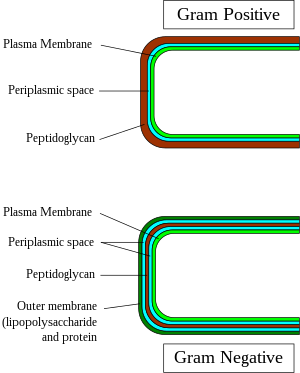 |
| Figure 2: The difference between Gram + and Gram - bacteria. Look out for the Peptidoglycan layer. |
 |
| Figure 3: How the Peptidoglycan wall builds up |
See you Soon for more Sexy Science,
Tuesday, 4 March 2014
Did you Know? About Omega-9?
My Dear Sexy Readers,
We are resuming our Did you Know? Series today with an extra bit of information on Omegas!!! We already talked about them in our post about Olive Oil, better than Butter? And of course in our latest post on What are Omega-3 and -6?
We already addressed Omega-7 in the latest fast-read Sexy fact of our Did You Know? Series. This time, we are going to number 9!!! If you have a Pinterest board, you might wanna check out this article through its pin.
What is Omega-9?
For more information on SSS Did you Know Series, check out our growing list of amazing fast-read facts.
See you Soon for more Sexy Science,

We are resuming our Did you Know? Series today with an extra bit of information on Omegas!!! We already talked about them in our post about Olive Oil, better than Butter? And of course in our latest post on What are Omega-3 and -6?
We already addressed Omega-7 in the latest fast-read Sexy fact of our Did You Know? Series. This time, we are going to number 9!!! If you have a Pinterest board, you might wanna check out this article through its pin.
What is Omega-9?
Omega−9 fatty acids are common components of animal fats and vegetable oils. Two important omega−9 fatty acids in industry are Oleic acid (main component of olive oil, sunflower, macadamia oil and other monounsaturated fat) and Erucic acid (rapeseed, wallflower seed, and mustard seed). Like Omega-7, but unlike -3 and -6, Omega-9 is a non Essential Fatty Acid meaning that our body can produce it. Research has shown that Omega-9 MonoUnsaturated fatty acids can help reduce the risk of cardiovascular disease and stroke by increasing HDL (“good”) cholesterol and decreasing LDL (“bad”) cholesterol.
For more information on SSS Did you Know Series, check out our growing list of amazing fast-read facts.
See you Soon for more Sexy Science,
Oh OK, I'm too happy about my first Pinterest infographic so here it is:
Saturday, 1 March 2014
Did you Know? About Omega 7
My Dear Sexy Readers,
We are resuming our Did you Know? Series today with an extra bit of information on Omegas!!! We already talked about them in our post about Olive Oil, better than Butter? And of course in our latest post on What are Omega-3 and -6?
What is Omega-7?
For more information on SSS Did you Know Series, check out our growing list of amazing fast-read facts. Come back soon for our next Did You Know instalment which will be on Omega-9!!! Yep, another one :)
See you Soon for more Sexy Science,
We are resuming our Did you Know? Series today with an extra bit of information on Omegas!!! We already talked about them in our post about Olive Oil, better than Butter? And of course in our latest post on What are Omega-3 and -6?
Not many people know about Omega-7, we usually only hear about -3 and -6. Maybe because Omega-7 is a non essential monounsaturated Fatty acid meaning that our body can produce it. It is also known as Palmitoleic acid, a common constituent of animal fats and plant seed oils. It is different from Palmitic acid which is a saturated fat that comes from Palm oil, or dairy and meats.
We can consume some through a variety of animal oils, vegetable oils, and marine oils. Wild salmon, Macadamia oil and sea Buckthorn oil are the richest sources. Research shows it may help regulate fat and blood sugar metabolism, and ultimately weight loss. In vitro studies suggest that Omega-7 helps
improve the function of the insulin-producing beta cells of the
pancreas.There are also claims, although they need to be backed up by some serious studies, that Sea buckthorn oil, (which contains 30 to 40% Omega-7), has a role in improving eczema, acne, oral and stomach
ulcers, and vaginal irritation/dryness. However, studies also show that Omega-7, much like a saturated fatty acid and not like a true monounsaturated one, raises low-
For more information on SSS Did you Know Series, check out our growing list of amazing fast-read facts. Come back soon for our next Did You Know instalment which will be on Omega-9!!! Yep, another one :)
See you Soon for more Sexy Science,
Tuesday, 31 December 2013
Happy New Year 2014!!!!
My Dear Sexy Readers,
I wish you all a Sexy

See you Soon for More Sexy Science,

I wish you all a Sexy

I hope you had a fantastic Christmas, hopefully surrounded by your family.
NOW is time for fun with friends!!!
If you are out and about tonight, you will be in full preparation mode about right now, so if you are wondering what are the "chemicals" you put on your face, check out SSS mini series on Chemicals in your Make up.
Later on, you might be tempted by a late night snack such as a little omelet? Maybe you will be wondering if your eggs are still fresh, although this might not be your biggest worry. Anyhow, here is how to know!
Or maybe you'd like a nice piece of toast with some Nutella on it?
To make sure that you are not too hungovered, you might be tempted to finish your night with a cuppa. Find out here what are the effects of caffeine in your body.
Tomorrow morning, you will probably wake up wondering why you feel the way you feel!?! It might be about anything but this article is about 'feeling rough' after a big one!!!
And then will start the usual guilty feelings about not respecting your body, so you will be tempted to start a January Detox programme. Come over here for some tips and how to avoid spending too much money on so called miracle cures!
See you Soon for More Sexy Science,
Tuesday, 24 December 2013
Merry Christmas
My Dear Sexy Readers,
I wish you a
 I hope you have enjoyed this year's So Sexy articles.
And if you are in full Xmas preps and baking your way into your family's get together dinner, you might find the article about the difference between yeast and baking powder interesting or useful or need to know how to make a gorgeous home made mayonnaise.
Also, little tricks here or there about why you cry when you are chopping your onions, but fear not, they are good for your health, check it out over here.
When you'll be all finished in the kitchen and will be preparing yourself, you might wonder if wearing make up is really healthy, this mini-series on Chemicals in your make up will help you make up your mind on the subject. As well as being informative and an excellent conversation topic, check out this mini-series on What's in your Shampoo? with a focus on the infamous SLS and Parabens.
See you Soon for more Sexy Science,
I wish you a

And if you are in full Xmas preps and baking your way into your family's get together dinner, you might find the article about the difference between yeast and baking powder interesting or useful or need to know how to make a gorgeous home made mayonnaise.
Also, little tricks here or there about why you cry when you are chopping your onions, but fear not, they are good for your health, check it out over here.
When you'll be all finished in the kitchen and will be preparing yourself, you might wonder if wearing make up is really healthy, this mini-series on Chemicals in your make up will help you make up your mind on the subject. As well as being informative and an excellent conversation topic, check out this mini-series on What's in your Shampoo? with a focus on the infamous SLS and Parabens.
See you Soon for more Sexy Science,
Sunday, 8 December 2013
Did you Know? #6 - Blond hair are not only found in Europe
My Dear Sexy Readers,
Today we are resuming our "Did you know?" series on a fascinating subject that took its stem in our recent SSS post "The genetics behind hair colours".


Did you Know Collection
Today we are resuming our "Did you know?" series on a fascinating subject that took its stem in our recent SSS post "The genetics behind hair colours".

Natural Blond hair on Solomon islands
When I was researching the genetic variations behind hair colours and looking through pins on Pinterest to illustrate this, I stumbled upon something I never knew! In Melanesia and particularly on Solomon islands where people have predominantly a dark skin, the occurance of blond hair is almost 10%! Which is as much as in Northern Europe! Contrary to the European genetic complexicity, this blond hair trait is located on a single gene located on chromosome 9 and could account for 50% of all the blond people checked out (reference)!
Did you Know Collection
Thursday, 21 November 2013
Scientists - Science Artists? #2
My Dear Sexy Readers,
One thing you might not be aware of is that scientists are very artistic people. You can often find some videos of scientists such as this one I mentioned in a previous post. Once again, the magazine Science organised a contest 'Dance your PhD', the opportunity for the scientist to express his frustration and/or love for his subject.
This year the winner in the Biology category as well as the overall winner is Cedric Tan from the University of Oxford who is studying the sperm competition between brothers and female choice.
I find his video hilarious, as well as strangely informative :)
For more videos from the chemistry, physics and social science winners, check out the article from the Science Magazine HERE
The winner's video reminds me to invite you to check out SSS Did you Know serie and notably its first instalment on Egg!!! How appropriate :)
I will leave you today with this last video which won the reader's award. It features a lot of salsa dancing which I am particularly fond of as well as cancer biology! Who knew you could associate them!
See you Soon for more Sexy Science,
One thing you might not be aware of is that scientists are very artistic people. You can often find some videos of scientists such as this one I mentioned in a previous post. Once again, the magazine Science organised a contest 'Dance your PhD', the opportunity for the scientist to express his frustration and/or love for his subject.
This year the winner in the Biology category as well as the overall winner is Cedric Tan from the University of Oxford who is studying the sperm competition between brothers and female choice.
I find his video hilarious, as well as strangely informative :)
For more videos from the chemistry, physics and social science winners, check out the article from the Science Magazine HERE
The winner's video reminds me to invite you to check out SSS Did you Know serie and notably its first instalment on Egg!!! How appropriate :)
I will leave you today with this last video which won the reader's award. It features a lot of salsa dancing which I am particularly fond of as well as cancer biology! Who knew you could associate them!
See you Soon for more Sexy Science,
Wednesday, 21 August 2013
Youtube Geek Week
My dear Sexy Readers,
Special week on youtube where you can let your geek out and check out some cool and nerdy videos! WHY NOT???
I selected this one out for you, 10 cool experiments to do at home:

See you soon for more Sexy Science,
Special week on youtube where you can let your geek out and check out some cool and nerdy videos! WHY NOT???
I selected this one out for you, 10 cool experiments to do at home:

See you soon for more Sexy Science,
Wednesday, 3 April 2013
Did you Know? #5 - the amazing Vinegar
My Dear Sexy Readers,
For this week's Did you Know SSS - sexy short subject - we will have a look at the amazing usefulness of vinegar! We started this new series, appropriately with egg as the sexy short subject, going through egg as a baking ingredient, what's an emulsion, how to make a mayonnaise and why lemon juice or vinegar are added to it, but for our 5th episode:

Vinegar is the ideal house cleaning companion to get rid of lime scale
In fact, Vinegar has 1000s of use, like this website is explaining but what I'm interested in really is how vinegar works to remove lime scale.
Vinegar is a diluted (in water) version of acetic acid CH3COOH.
Limescale is a precipitate of calcium carbonate CaCO3
By adding them together:
2 CH3COOH+ CaCO3
 (CH3COO)2Ca + H 20 + CO2
The resulting product (CH3COO)2Ca is soluble in water and therefore easy to wash away!
Did you Know Collection
See you soon for more SSS,
For this week's Did you Know SSS - sexy short subject - we will have a look at the amazing usefulness of vinegar! We started this new series, appropriately with egg as the sexy short subject, going through egg as a baking ingredient, what's an emulsion, how to make a mayonnaise and why lemon juice or vinegar are added to it, but for our 5th episode:
Vinegar is the ideal house cleaning companion to get rid of lime scale
In fact, Vinegar has 1000s of use, like this website is explaining but what I'm interested in really is how vinegar works to remove lime scale.
Vinegar is a diluted (in water) version of acetic acid CH3COOH.
Limescale is a precipitate of calcium carbonate CaCO3
By adding them together:
2 CH3COOH
 (CH3COO)2Ca + H 20 + CO2
The resulting product (CH3COO)2Ca is soluble in water and therefore easy to wash away!
Did you Know Collection
See you soon for more SSS,
Wednesday, 20 March 2013
Did you Know? #4 - Vinegar and lemon juice as Preservatives
My Dear Sexy Readers,
Let's resume our serie "Did you Know". Last time we looked at how to make a mayonnaise and by understanding the chemical process behind it, how not to make a mess out of it! Today we are going to look at other ingredients we can add to a mayonnaise:
Vinegar, lemon juice and salts are used as natural preservatives
Lemon juice, vinegar and salt create an unfriendly environment for bacteria to slow down or stop their growth.
Bacteria need a wet environment to grow in. By adding salt to a product which will absorb all the humidity, you will basically dry it. This dry environment will be a bad niche for bacteria to grow and indeed can even be deadly for them!!
Lemon juice contains citric acid and vinegar, acetic acid, which both create an acidic environment where bacteria will not like for their growth...
(Note: Citric acid is added to cosmetics, pharmaceuticals, drinks and food.)
For more on this serie, check out the Did you Know Collection
See you soon for more SSS ,
Let's resume our serie "Did you Know". Last time we looked at how to make a mayonnaise and by understanding the chemical process behind it, how not to make a mess out of it! Today we are going to look at other ingredients we can add to a mayonnaise:
Vinegar, lemon juice and salts are used as natural preservatives
Lemon juice, vinegar and salt create an unfriendly environment for bacteria to slow down or stop their growth.
Bacteria need a wet environment to grow in. By adding salt to a product which will absorb all the humidity, you will basically dry it. This dry environment will be a bad niche for bacteria to grow and indeed can even be deadly for them!!
Lemon juice contains citric acid and vinegar, acetic acid, which both create an acidic environment where bacteria will not like for their growth...
(Note: Citric acid is added to cosmetics, pharmaceuticals, drinks and food.)
For more on this serie, check out the Did you Know Collection
See you soon for more SSS ,
Wednesday, 6 March 2013
Did you Know? #3 - Mayonnaise
My Dear Sexy Readers,
We shall resume our new series entitled "Did you Know" of posts inspired by one another. This idea for a SSS series came to me when I, once again, got lost on google and wikipedia searching for one thing and ending up 2 hours later reading something completely different!!! lol
A mayonnaise is an emulsion of oil into egg yolk and an acid
Here is a quick recipe for a mayonnaise:
290 mL oil (groundnut, vegetable, olive (to taste))
2 egg yolks
1 table spoon mustard (optional)
1 table spoon lemon juice/white vinegar (to taste)
salt, pepper (to taste)
Mix all ingredients but the oil, beat together until well combined
Drizzle oil to mix while whisking away. Don't stop whisking until all oil is added.
As soon as the oil is introduced (figA), its droplets should be immediately dispersed into the egg yolk mix (figD). The emulsion then appears white because of the way the light is deviated equally on the phases. If you don't mix well, you will obtain something similar as in figure B which eventually will separate into your two phases like in figure C.
Season it with salt and pepper, or any other herbs...
You can now check out the Did you Know collection
See you soon for more SSS,
We shall resume our new series entitled "Did you Know" of posts inspired by one another. This idea for a SSS series came to me when I, once again, got lost on google and wikipedia searching for one thing and ending up 2 hours later reading something completely different!!! lol
A mayonnaise is an emulsion of oil into egg yolk and an acid
Here is a quick recipe for a mayonnaise:
290 mL oil (groundnut, vegetable, olive (to taste))
2 egg yolks
1 table spoon mustard (optional)
1 table spoon lemon juice/white vinegar (to taste)
salt, pepper (to taste)
Mix all ingredients but the oil, beat together until well combined
Drizzle oil to mix while whisking away. Don't stop whisking until all oil is added.
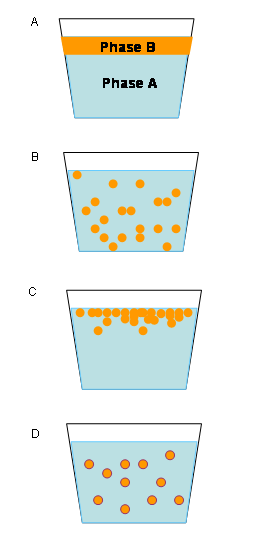 |
| From HERE, Phase A is your mix of egg yolk/mustard/lemon, Phase B is your oil. |
As soon as the oil is introduced (figA), its droplets should be immediately dispersed into the egg yolk mix (figD). The emulsion then appears white because of the way the light is deviated equally on the phases. If you don't mix well, you will obtain something similar as in figure B which eventually will separate into your two phases like in figure C.
Season it with salt and pepper, or any other herbs...
You can now check out the Did you Know collection
See you soon for more SSS,
Wednesday, 20 February 2013
Did you Know? #2 - Eggs in cakes
My Dear Sexy Readers,
Our new SSS DYK series is on its way with the first instalment being on how do we know if eggs are still edible, but...
An emulsion is a mix of two ingredients that are not normally mixable like water and oil. An emulsifier helps the mix to "stick" together.
Egg yolk and mustard are food emulsifiers (detergents are another type of emulsifiers and are called surfactants. For more info on detergents, check out SSS previous mini-serie on What's in your shampoo?). Eggs in cakes help the fats to stay dispersed in the mix which promotes thickening of the mixture.
When eggs are heated, they bind the ingredients together and give the smooth texture.
Also responsible for these delicious taste buds sensations is the Lecithin protein in egg yolk which reduces the moisture loss, therefore contributing to the softness. The egg whites also give texture and lightness thanks to their foaming capabilities.
For more info on cake making, check out this previous SSS post on the difference between baking powder and yeast .
Did you Know collection
See you soon for more SSS ;)
Our new SSS DYK series is on its way with the first instalment being on how do we know if eggs are still edible, but...
Eggs are part of cake recipes for their emulsification, coagulation and foaming properties.
An emulsion is a mix of two ingredients that are not normally mixable like water and oil. An emulsifier helps the mix to "stick" together.
 |
| From HERE |
Egg yolk and mustard are food emulsifiers (detergents are another type of emulsifiers and are called surfactants. For more info on detergents, check out SSS previous mini-serie on What's in your shampoo?). Eggs in cakes help the fats to stay dispersed in the mix which promotes thickening of the mixture.
When eggs are heated, they bind the ingredients together and give the smooth texture.
Also responsible for these delicious taste buds sensations is the Lecithin protein in egg yolk which reduces the moisture loss, therefore contributing to the softness. The egg whites also give texture and lightness thanks to their foaming capabilities.
For more info on cake making, check out this previous SSS post on the difference between baking powder and yeast .
Did you Know collection
See you soon for more SSS ;)
Wednesday, 6 February 2013
Did you know? A new SSS series - #1 - Fresh eggs sink
My Dear Sexy Readers,
Have you ever got lost on google or wikipedia? You got there to find out something and 2 hours later you were still on it but you got so side tracked reading interesting stuff you forgot why you were there in the first place? That is exactly why I'm starting this brand new series on linked SSS (Short Sexy Subjects) we knew once and we forgot about, as well of SSS (Super Sexy Science) facts.
Well here is my chance to try to make you forget about work and stuff and get lost right here on SSS :)

Fresh eggs sink in fresh water while rotten eggs float.
As time goes, water vapours and gases escape from the porous egg shell. This makes the egg to decompose and the yolk to shrink, making the air pocket grow bigger. This new free space is filled by more and more ambiant air that filters in.
The more air it contains, the more it floats.
So a fresh egg will completely sink at the bottom of a bowl of fresh water (no salt added like when you're cooking - here is why). As the days go by, the egg will start tilting on its small angle with its wide angle (where the air pocket is) floating. When the egg becomes stale, the air pocket is so important it will make the egg floats.
Here you go, SSS readers, to illustrate this first SSS Did you Know,
I found you a cool video:
Did you Know Collection
See you soon for more SSS :)

Have you ever got lost on google or wikipedia? You got there to find out something and 2 hours later you were still on it but you got so side tracked reading interesting stuff you forgot why you were there in the first place? That is exactly why I'm starting this brand new series on linked SSS (Short Sexy Subjects) we knew once and we forgot about, as well of SSS (Super Sexy Science) facts.
Well here is my chance to try to make you forget about work and stuff and get lost right here on SSS :)

Fresh eggs sink in fresh water while rotten eggs float.
As time goes, water vapours and gases escape from the porous egg shell. This makes the egg to decompose and the yolk to shrink, making the air pocket grow bigger. This new free space is filled by more and more ambiant air that filters in.
 |
| From HERE |
The more air it contains, the more it floats.
So a fresh egg will completely sink at the bottom of a bowl of fresh water (no salt added like when you're cooking - here is why). As the days go by, the egg will start tilting on its small angle with its wide angle (where the air pocket is) floating. When the egg becomes stale, the air pocket is so important it will make the egg floats.
Here you go, SSS readers, to illustrate this first SSS Did you Know,
I found you a cool video:
Did you Know Collection
See you soon for more SSS :)
Subscribe to:
Posts (Atom)